
Sliding Windows in Wilmington and Coastal Carolina
If you want a window that’s simple to operate and works well in wider openings, sliding windows are often a practical solution.
Sliding windows open horizontally along a track, with one panel moving past the other. The design eliminates the need to lift a sash, making them easy to operate in many everyday settings. This is usually about ease of use – especially in spots where lifting a window just doesn’t make sense.
If you’re considering sliding windows, schedule your free consultation, and we’ll help you decide if they’re the right fit for your home.
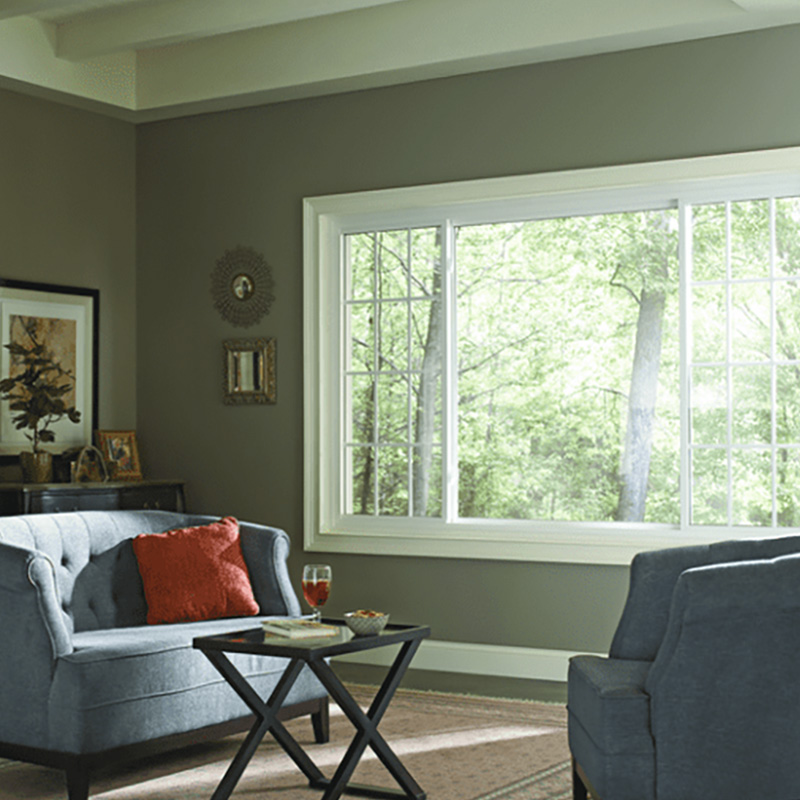
When Sliding Windows Make Sense
Sliding windows are often ideal when:
- The window opening is wider than it is tall
- You want easy, side-to-side operation
- The window sits above a counter, sink, or furniture
- You prefer a clean, contemporary look
Because they glide horizontally, sliding windows are especially useful in kitchens, living areas, and rooms where lifting a sash would be inconvenient.
If ease of operation matters in your home, sliding windows may be a strong option.
When Another Window Style May Be Better
Sliding windows may not be the best choice if:
- You want maximum airflow from a fully open side-hinged window
- The opening is tall and narrow
- You prefer the symmetry of a vertically operating design
In those cases, casement or double hung windows may offer advantages depending on the space.
Frame Material Options
Sliding windows are available in multiple frame materials depending on brand and configuration.
Common options include:
- Vinyl for low maintenance and moisture resistance
- Fiberglass for added strength and durability
- Wood interiors in select product lines
- Aluminum-clad designs in certain configurations
We’ll help you choose materials that perform well in Wilmington’s coastal humidity and sun exposure.
Brands We Offer
Wallaby Windows carries multiple trusted window brands, giving you flexibility beyond a single product line.
This allows you to compare:
- Construction quality
- Frame material options
- Glass performance packages
- Warranty coverage
- Budget ranges
You’ll be able to see how different options actually compare, not just be pointed to one brand before making a decision.
The Freedom to Choose from Trusted Window Brands Guided by Professionals Who Know the Difference





Wallaby Windows can install virtually any window brand, so if you already have a preference,
we can help you choose the right fit for your home.
Coastal Performance Considerations
In Coastal Carolina, humidity and salt exposure require careful window selection.
Sliding windows perform best when:
- Tracks are properly aligned
- Frames are sealed tightly
- Drainage paths are correctly installed
- Energy-efficient glass is selected
With sliding windows, alignment matters – if it’s off, you’ll feel it every time you use it.
Impact-Resistant Sliding Window Options Available
In Wilmington and Coastal Carolina, wide window openings can be especially vulnerable during hurricanes and strong wind events.
Sliding windows are available with impact-resistant laminated glass and reinforced frame systems designed to handle coastal wind loads.
Impact-rated sliding configurations may include:
- Laminated glass engineered to resist shattering from debris
- Reinforced frames built to support larger horizontal openings
- Strengthened track systems to maintain panel stability under pressure
- Enhanced sealing to reduce wind-driven rain intrusion
Because sliding windows operate along a horizontal track, structural rigidity and proper alignment are critical in high-wind environments. We’ll walk through what makes sense based on your location and how exposed your home is.
If hurricane protection is a priority for your home, schedule your free consultation, and we’ll review impact-rated sliding window options available across multiple brands and materials.
What Do Sliding Windows Cost?
Sliding windows can vary in price depending on size, materials, and how they’re installed.
Most of the time, pricing depends on the width of the opening and the type of frame and glass you choose.
If you want a quick ballpark, you can use the pricing tool below.
When we meet, we’ll walk through your home and compare this to other options so you can decide what makes the most sense.
What Will My Window Replacement Cost?
Answer 8 quick questions to get a realistic ballpark estimate for your home — no sales call, no pressure.
How many windows are you thinking about replacing?
Include every window you'd want priced. You can adjust this later — it's just the starting point for your estimate.
Most Coastal Carolina homes have 12–22 windows.
Not sure yet? Start with 10 and adjust any time.
Do you have a window material in mind?
Material is one of the single biggest cost drivers. "Not sure yet" is a totally valid answer — we'll show you the full range.
Do you need impact-rated windows?
Impact windows are engineered to withstand hurricane-force winds and flying debris. In many Coastal Carolina areas they may be required by code — and they can reduce your insurance premiums while eliminating the need for storm shutters.
What type of home are we working on?
Multi-story homes and waterfront or high-wind-exposure locations can affect both labor requirements and product recommendations.
What do you know about your current windows and home condition?
Older homes and coastal properties often have wood rot or soft framing around window openings. Knowing this upfront helps us build a more honest estimate — and means no surprises on install day.
Are you adding any doors to this project?
Many homeowners upgrade doors at the same time as windows — it simplifies scheduling. Set any door type to 0 if it doesn't apply.
Last step — a couple of quick details.
Enter your zip code so we can confirm we serve your area.
Your Window Replacement Estimate
Based on your answers — scroll down to see what's included and what could change the number.
Window replacement costs in Coastal Carolina can range from $5,000 for a small partial job to well over $40,000 for a full whole-home impact project. Here's what actually moves the number:
- Material: Vinyl is the most affordable and most popular. Fiberglass performs better in coastal humidity and salt air but costs more. Wood carries the highest price tag and requires more upkeep — it's rarely recommended for oceanfront homes.
- Impact vs. standard glass: Impact-rated windows can add 45–60% to window cost. However, many homeowners recoup part of that through reduced insurance premiums and by eliminating the need for hurricane shutters.
- Project size: Whole-home replacements typically cost less per window than replacing one or two at a time because installation labor and mobilization are spread across the full project.
- Installation conditions: Older homes in coastal areas often have wood rot or soft framing around window openings. Finding and fixing that during installation adds cost — but it has to be done correctly or your new windows won't seal or hold properly.
- Product tier within each material: Even within vinyl, there are entry-level, mid-range, and premium product lines with meaningfully different performance specs and price points.
The best way to get a firm number is a free in-home assessment. That's where we measure every opening, check for hidden issues, and give you a real price — not a range.
- Window product cost (materials and hardware)
- Professional installation labor
- Standard interior and exterior trim and casing
- Haul-away and disposal of old windows
- Caulking and weather sealing at install
- Manufacturer product warranty
- Wallaby Windows installation workmanship warranty
- Free 23-month post-installation inspection
These are the most common reasons a final quote comes in higher than a ballpark estimate:
- Wood rot or structural damage discovered around the window frame during removal — common in older coastal homes and almost always needs to be repaired for the new window to seal properly
- Non-standard or custom window sizes that can't be filled with a stock product and require a special order
- Upper-floor or difficult-access windows that require scaffolding, extended ladders, or more setup time
- Interior finish upgrades — custom trim profiles, jamb extensions, or wrapping that go beyond standard casing
- Permit fees depending on your municipality or HOA requirements
- Material or glass package upgrades — obscure glass, specialty colors, or a higher-performance SHGC/U-factor package
Our free assessment is specifically designed to catch all of these upfront, so there are no surprises on install day.
Ready to get an exact number?
A free, no-pressure in-home assessment is the only way to get a firm price. We measure every window, check for hidden issues, and walk you through your options — with zero obligation to buy.
Get Your Exact Quote
Fill in your contact info and we'll reach out within 1 business day to schedule your free, no-pressure in-home assessment.
We will never share your information. No spam, ever.
You're all set!
We received your info and will be in touch within 1 business day to schedule your free, no-pressure in-home assessment.
In the meantime, feel free to browse our most common questions below.
Our 3-Step Process
Step 1: Evaluate Your Home
Step 2: Review Your Options
Step 3: Install With Care
If you want expert guidance without pressure,
schedule your free consultation with Wallaby Windows.
Frequently Asked Questions About Sliding Windows
Are sliding windows energy efficient?
Yes, when paired with modern glass packages and properly sealed during installation.
Are sliding windows easy to operate?
Yes. Their horizontal gliding design makes them simple to open and close.
Do sliding windows provide good airflow?
They provide steady ventilation, though not as much full opening area as casement windows.
Where are sliding windows commonly used?
What’s the next step?
Schedule your free consultation, and we’ll help determine whether sliding windows are the right fit for your home.